Blog · By The Packaging Vista Team · June 20, 2026
Custom Packaging by Industry: A Simple Guide to Choosing the Right Boxes
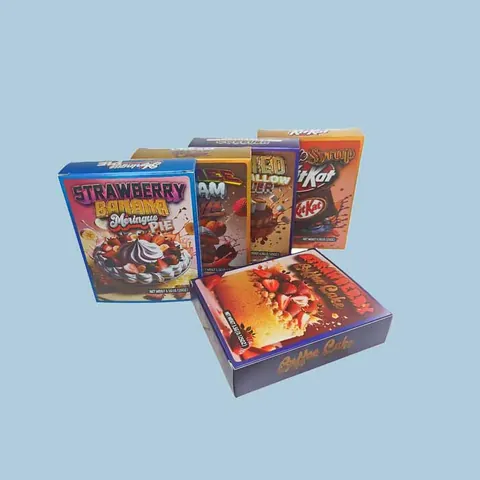
Different industries need different packaging. A CBD brand worries about child-resistance. A beauty brand wants a premium feel. A bakery needs food-safe, grease-proof boxes.
This guide to custom packaging by industry is a quick map. Find your industry, see what matters most for packaging design, product protection, and shipping packaging – then jump straight to the right custom boxes. New to packaging? Start with our beginner’s guide.
How do you choose packaging for your industry?
It comes down to three quick questions:
- What is the product? Its size, shape, and weight set the box style.
- What are the rules? Some industries, like CBD and food, have labeling or safety rules.
- Where does it sell? A retail shelf and an e-commerce mailer need different designs.
Answer those, then pick your industry below.
Under the surface, almost every industry balances three pressures. Knowing which one wins for your product makes the rest simple.
The first is regulation. Does a government body set what must show on the box, how it closes, or what it can be made from?
The second is protection. How fragile, heavy, oily, or perishable is the product? How far does it travel before someone opens it?
The third is presentation. How much of the buy is driven by how the pack looks and feels?
A CBD tincture leans hard on rules. A ceramic mug leans on protection. A fine-fragrance bottle leans on look. Yet most products feel all three at once.
The top mistake we see is a brand copying a box that worked for a neighbor in a different category. Then they find it fails the one pressure that mattered for them. The sections below sort common industries by whichever pressure tends to win. So you can start from a structure already pointed the right way.
What do CBD and cannabis brands need?
CBD, hemp, and cannabis brands face the strictest rules. The box often needs child-resistant features and room for required labels.
What matters most:
- Child-resistant options where the law needs them
- Space for warnings, batch numbers, and a lab-result (COA) QR code
- Clean, compliant artwork
Start here: custom CBD packaging for compliant brands. Popular picks: custom printed pre-roll boxes, branded vape boxes for retail, and custom hemp oil boxes wholesale. Want the full rules? Read our CBD packaging guide and the CBD label requirements.
What makes this category different is that the rules are not national and not stable. A layout that is fully compliant in one state can be short a warning or a font size in the next. The rules shift as new laws catch up with the market.
So the smart move is to design the box with room to spare. Do not pack every panel to the edge. Leave a clear zone for batch numbers, made-on and use-by dates, net weight, and a scannable link to the certificate of analysis.
Keep the art clean enough that adding one line later does not force a full redesign. Child-resistant builds – push-and-turn closures, locking cartons, slide packs – add cost and time. So confirm where you plan to sell before locking the format.
Our design team builds the dieline with these needs in mind. We send a digital proof. You can check that every needed part fits and reads before a single unit prints. Getting the rules layer right up front is far cheaper than a reprint after a distributor or platform rejects it.
What do beauty brands need?
Beauty sells on looks and feel. The box is the first thing a buyer touches. So finish matters as much as fit.
What matters most:
- Premium finishes: soft-touch, foil, and spot UV
- Inserts that hold bottles and palettes in place
- Exact brand colors with Pantone matching
Start here: custom printed cosmetic boxes. Popular picks: custom lipstick boxes with inserts, printed cream boxes for beauty, and luxury perfume boxes with foil. For the strategy behind a premium look, see our cosmetic packaging guide.
What do food brands need?
Food packaging must be safe first. It touches what people eat. So the stock and inks must be food-grade.
What matters most:
- FDA-compliant, food-safe materials
- Grease and moisture barriers for oily or wet foods
- Sturdy builds that shield the product in transit
Start here: food & beverage boxes. Popular picks: food-safe custom bakery boxes, sturdy custom cake boxes, and custom Chinese takeout boxes. Learn the rules in our food-safe packaging guide.
Food is the one category where the material touching the product is not a design choice. It is a safety need. The right answer depends on what the food does.
Dry goods like cookies, chocolates, or coffee are forgiving. They travel well in a standard printed carton.
Anything greasy, saucy, or warm is different. Fats and moisture seep into plain paperboard. That weakens the box and stains the print. So those products need a grease-resistant liner or coating, not raw stock.
Cold and frozen items ask the other side of the question. How does the board and ink behave with condensation and cold?
Beyond the material, food packaging lives on speed and turnover. A bakery or takeout kitchen builds boxes by the hundred every day. They cannot fight a fiddly build. So auto-lock bottoms, tuck tops, and one-motion folds matter. Staff should pop a box open and load it in seconds.
When you ask for a quote, tell us if the contents are dry, oily, wet, hot, or frozen. We will suggest a food-safe stock and a build that holds up in real service.
What do retail and online brands need?
Retail boxes have one job: win the sale. On a shelf that means stand out. Online it means a great unboxing.
What matters most:
- Shelf-ready features like hang tabs and barcodes
- Branded mailers for e-commerce and subscriptions
- Eco-friendly, recyclable options
Start here: custom retail boxes for shelves. Popular picks: branded ecommerce mailer boxes, premium rigid boxes for gifts, and custom printed gift boxes. For the full playbook, see our retail packaging guide.
What do supplement brands need?
Supplements, vitamins, and wellness products sit between retail and ruled categories. The box needs room for ingredient panels, dosage, and needed disclaimers. It should read as clean and trustworthy. This is a category where buyers scan the label. A printed folding carton with a fitted insert keeps bottles upright and safe.
Start here: custom supplement boxes for bottles, and see our supplement packaging guide for labeling and build tips.
What do soap and candle brands need?
Handmade brands live on craft appeal. Buyers expect natural materials, an honest look, and packaging that feels as thoughtful as the product. Kraft stock, simple print, and wraps are the staples here. A window can let the product show through.
Start here: kraft soap boxes for artisans, custom candle boxes with inserts, and kraft window boxes for retail. Our soap packaging guide and candle packaging guide cover the details.
What do jewelry and luxury brands need?
Some products live on presentation. Jewelry, watches, premium electronics, spirits, and high-end gift sets all lean on a box that feels weighty the moment it is picked up.
This is the land of rigid set-up boxes, magnetic-closure lids, and fitted inserts that hold each piece in place. Finishes do heavy work here too. Soft-touch lamination, foil-stamped logos, and embossing all signal value before the product is even seen. Get this right and the box becomes part of the gift.
Start here: luxury jewelry boxes with inserts, luxury rigid set-up boxes, and rigid magnetic closure gift boxes. For the strategy, read our luxury packaging guide.
What do subscription brands need?
If your business ships the same box on a recurring basis, the pack is your brand’s monthly handshake.
Subscription brands invest in a repeatable unboxing. That means a branded mailer, printed interior, tissue, and an insert that presents each item. The moment drives renewals and social sharing.
Consistency matters more than novelty. Buyers should know the box every time it arrives, even as the contents change.
Start here: branded subscription boxes for unboxing and custom printed mailer boxes. See our subscription box packaging guide for the full approach.
Not sure? Can you choose by box style?
If you already know the shape you need, skip the industry step. We make custom boxes in every common style – mailers, rigid, corrugated, folding cartons, and die-cut – in any material.
What else do we print?
Packaging is more than boxes. We also print custom kraft and butcher papers (kraft, butcher, parchment, deli, and more) and printed marketing like brochures, business cards, and stickers. All handy for liners, wraps, and unboxing inserts.
What do all industries share?
For all the gaps between a compliant CBD carton and a luxury rigid box, the making choices under them are much the same. Knowing those shared parts helps any brand ask better questions.
The first is corrugated vs. paperboard. Corrugated – the fluted, sandwich-style board – is what you want when a product is heavy or must survive shipping. That is why mailers and shippers use it.
Folding cartons made from single-ply paperboard are lighter and print well. That makes them the workhorse of retail shelves. Rigid set-up board is the thick, non-folding material behind premium and luxury boxes. It has a heft that buyers read as quality the second they lift it. Most brands end up using more than one across their range.
The second shared choice is how the box prints. Digital print shines on small runs and lets you swap art fast. Offset printing gets cheaper as volume climbs. It also holds fine detail and solid color fields cleanly over a long run.
If your brand color must match exactly – and for beauty, spirits, and any known brand it usually must – Pantone matching keeps that color the same from one order to the next. It stops the color drifting toward whatever the press happens to mix.
Finishing is the last layer. Soft-touch and matte or gloss lamination change how the surface feels. Foil stamping, spot UV, and embossing add contrast and texture that photograph well and reward a closer look. None of these carry a hidden die, plate, or setup fee with us. So you can spec the finish the product deserves.
The last thing worth naming is that quantity shapes everything. A brand doing a first run of 100 units and a brand reordering 10,000 are solving different problems.
The honest truth is that the best build, print method, and finish shift with volume. Our minimum is just 100 boxes with no setup charges. So you can start small, prove the product, and scale the same design up later without redoing the base work.
Whatever your industry, the path is the same. Tell us the product, the quantity, and where it sells. We will build a dieline, a digital proof, and a 3D mockup. So you can see what you are getting before it prints.
Where should each industry start?
| Industry | Cares most about | Start here |
|---|---|---|
| CBD & cannabis | Compliance & child-resistance | compliant CBD packaging with child-resistance |
| Cosmetic & beauty | Premium look & feel | premium cosmetic boxes for beauty |
| Food & beverage | Food safety & freshness | food & beverage boxes |
| Retail & e-commerce | Shelf appeal & unboxing | branded retail boxes for ecommerce |
| Any product | A specific box shape | custom boxes in any style |
Why do brands choose Packaging Vista?
Whatever your industry, the basics stay the same:
- No die, plate, or setup fees
- A low 100-box minimum
- Free design and a free dieline
- An 8–10 day turnaround
See why brands choose us.
Frequently asked questions
How do I know which box is right for my product?
Start with your industry above. Or tell us the product, its size, and where it sells. Our free design team will suggest a box style and build a dieline for you.
Do you only make boxes for these industries?
No. These are just the most common ones. If your product is not listed, we still make a custom box for it. Just ask.
What is the minimum order?
Just 100 boxes, with no die, plate, or setup fees. That keeps a first run low-cost for new and growing brands.
Can you help with the design?
Yes. Free design support and a free dieline come with every order. Plus a digital proof before anything prints.
How do I choose the right packaging for my industry?
Answer three questions: what is the product (size, shape, weight), what are the rules (child-resistance for CBD, food-safety for consumables, cosmetic labeling for beauty), and where does it sell (shelf, e-commerce, subscription). Then match to the industry section: CBD leans on compliance; beauty on premium finish; food on food-safe barriers; retail on shelf appeal and unboxing; jewelry and luxury on rigid weight.
Copy from the neighbor category that lost is the top mistake to avoid.
What are the benefits of industry-specific packaging over generic boxes?
Compliance issues (missing CR features, no room for INCI panels, wrong food-safety spec) get caught before print. Structure fits the actual product (inserts hold bottles, cakes stay level, wefts do not tangle). Finishes match the price tier and buyer expectation of the category.
Shelf performance goes up because the box is designed for how the industry actually merchandises. And you avoid overspec – no reason to pay for a rigid gift box when a printed tuck-end wins the category.
What is the difference between packaging for CBD and packaging for cosmetics?
CBD boxes lean on state-specific compliance: child-resistant closures, warnings, batch numbers, COA QR codes, and layouts that leave room to add new required copy as laws shift. Cosmetic boxes lean on premium presentation: soft-touch and foil finishes, tight brand color via Pantone matching, INCI ingredient panels sized to fit, and structures (rigid, magnetic) that support unboxing content.
Both need dielines built with the category’s pressures in mind; one wrong copy from the other rarely fits.
How much does industry-specific packaging cost compared to stock?
Pricing is quote-based on size, stock, finish, and quantity, with no die, plate, or setup fees at the 100-box minimum – the same base terms apply across every industry. The finishes and structures each category needs (child-resistant CBD, foil beauty, PFAS-free food, rigid luxury) each add small increments over a plain retail carton, but almost all pay back through lifted perceived value, fewer compliance rejections, and lower damage rates.
Custom is reachable for small brands in every category we serve.
Which packaging is best for a brand that sells across multiple industries?
Standardize on the base tier (paperboard folding carton, digital or offset print, one Pantone brand color, one hero finish) and vary the structure and compliance layer per industry line. A wellness brand selling both cosmetic and CBD, for example, uses the same brand palette and typography, but a straight tuck carton with INCI panel for the cosmetic line and a locking child-resistant carton with COA panel for the CBD line.
Consistency across the base, variance where the industry demands it.
Is it worth switching to industry-specific packaging if a generic box already works?
If the generic box passes compliance, fits the product without damage, and reads on brand for the category, no – it works. Switch when compliance shifts (new state CBD rules, PFAS bans), when growth into a new sales channel exposes a mismatch (a mailer that fails on retail shelf), or when perceived value is capping your pricing (a cheap outer carton on a $60 product).
At 100-box minimums with no setup fees, the switch is low-friction when the trigger is real.
Browse everything on our box by industry page, then request a free quote or contact our team to get started.