Blog · By The Packaging Vista Team · June 23, 2026
Custom Window Boxes in the USA: Sourcing From a US Manufacturer
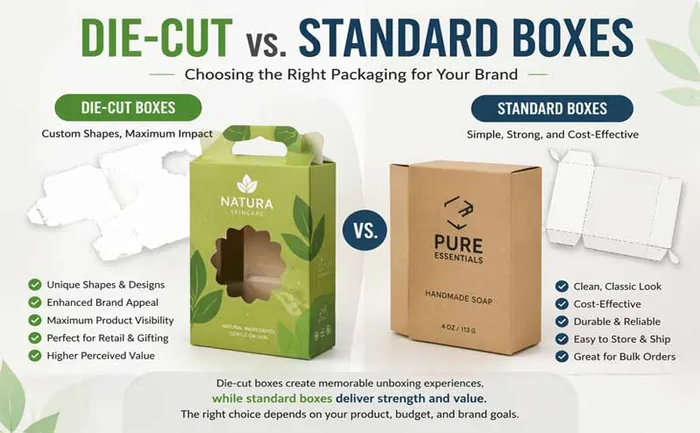
A window box sells the product, not the print. The clear panel cut into the front lets a shopper see the real soap bar, cupcake, toy, or candle inside. That real proof is what closes the sale on a shelf.
But the window is the part that makes the box harder to build than a plain carton. It needs a clean die-cut opening and a flat, wrinkle-free film patch bonded behind it. This guide covers the film choices, where the window should sit, and why having that patching done in the US keeps it crisp. To see the full lineup, visit our retail window box page.
PET or PVC: which window film should you pick?
The patch behind the opening is a thin sheet of clear plastic. The two we run most are PET and PVC.
PET is the stiffer, more optically clear pick. It is a common food-safe choice. That is why bakeries, chocolate makers, and candy shops tend to use it.
PVC is softer and a bit cheaper. It is fine for non-food retail where the contents do not touch the film. We will suggest a film based on what is going in the box and how clear you want the view. You confirm any direct-contact rule for your product. The full picture on contact safety is in our food-safe packaging guide.
| Film | Clarity | Food contact | Best for |
|---|---|---|---|
| PET | High, glass-like | Widely used | Bakery, chocolate, candy |
| PVC | Good | Non-food retail | Toys, cosmetics, gifts |
| Uncoated cutout | No film | N/A | Soap (breathable curing) |
| Frosted PET | Diffused | Yes | Semi-hidden gift reveals |
How do window shape and placement move product?
We charge nothing for the cut. So the window can be any shape that frames your product best. A centered rectangle. A circle. A heart. A die-cut copy of your logo. Or a wraparound front that shows the item from two faces.
Placement matters as much as shape. A window set high catches the eye at standing height. One set low shows off a decorated base. An L-shape or corner cut shows depth. We lay the exact window size and position onto your free dieline and 3D mockup. So you approve the reveal before we run anything.
If you want a fully shaped outer carton rather than a window in a standard one, our custom-shape die cutting covers that.
Which box styles take a window well?
Almost any carton style can carry a patched window. We build them all in the US:
- Reverse and straight tuck-end cartons with a front window — the everyday retail standard.
- Sleeve and tray-and-sleeve formats where the window rides on the slip cover.
- Auto-bottom boxes with a window for heavier items that need a stronger base.
- Pillow and gable styles with a die-cut reveal for gift and novelty lines.
Stock options run from bright SBS for vivid color to natural kraft paperboard for a natural look and recycled board for greener lines. A window pairs well with the kind of goods people buy with their eyes. See how it plays out in beauty and cosmetic packaging and soap and bath boxes.
Why does patching belong in the US?
Film patching is where a window box goes wrong if it is rushed. Bubbles. Wrinkles. Lifting edges. Or a haze that dulls the product.
Our US-based team manages the bonding and inspects the result. That means you are not waiting six to ten weeks for a sea container before you find a bad batch.
Production runs about eight to ten working days after you approve the proof. Rush is on offer for a launch. Your dieline stays on file. So reorders of a proven window box are a fast repeat.
Are minimums low for seasonal and test runs?
Window boxes are often seasonal. Holiday chocolates. A limited soap scent. A gift edition. So you rarely want a giant run.
The minimum here is 100 boxes with no die, plate, or setup fee. That means a custom window shape on a short seasonal run costs nothing extra in tooling. Every order includes the free dieline and 3D mockup and ships free anywhere in the country. For where the dollars go, see our packaging cost breakdown. To compare against print-only retail formats, browse shelf-ready retail boxes.
How do you order your window boxes?
Send the product sizes, the window shape and box style you have in mind, the film and stock, and the quantity. We return a free dieline and 3D mockup. You sign off on the window placement and overall fit. Then we print, cut, patch, and ship. Kick off a custom window box order with a free quote or message the team.
Frequently Asked Questions
What is the difference between PET and PVC window film?
PET is stiffer, more optically clear, and a common food-grade-compatible choice favored by bakeries and chocolatiers; PVC is softer and slightly more economical for non-food retail. We recommend one based on your product and confirm any direct-contact requirement with you.
Can the window be a custom shape like a circle or my logo?
Yes. Since we charge no die or setup fee, the window can be a rectangle, circle, heart, logo silhouette, or full panoramic front at no extra tooling cost. We map the exact shape and position onto your dieline so you approve it first.
Will the film be safe against direct food contact?
It can be. PET is widely used for food window applications, and we also offer food-grade board. You confirm the contact requirements for your particular product, and we build the box and choose the film to match.
Are window boxes a good fit for short seasonal runs?
much so. The 100-box minimum with no tooling fee makes a custom window shape affordable on a limited holiday or seasonal edition, and a US-based supplier keeps the lead time short enough to hit a dated launch.
How do you keep the film patch from wrinkling or bubbling?
We laminate and inspect the patch on our own domestic line rather than outsourcing it overseas, which lets us control the application and catch any haze, bubbles, or lifting before the boxes ship.
How do I choose the right window shape and placement?
Match window to what sells the product. A centered rectangle or circle works for a symmetrical hero item like a candle jar or bath bomb. A high-set window catches the eye at standing shelf height; a low one shows off a decorated base. An L-shape or corner cut shows depth for products like chocolates or soap bars. A logo-silhouette cut doubles as branding. Any shape costs the same with no die fee.
What are the benefits of using a window box over a solid printed carton?
The window lets shoppers see the real product – a soap bar’s color, a cupcake’s topping, a candle’s wax layer, or a toy’s design. That real proof closes sales that even the best printed image on a solid carton can’t.
It’s especially strong for handmade, artisan, and food products where the buyer is buying the look and texture as much as the concept. Pair it with a printed border for the best of both.
How much does a custom window box cost compared to a plain carton?
Window boxes cost modestly more than a plain printed carton because they need a clean die-cut opening and a film patch bonded behind it. At Packaging Vista the film patching happens on our own line in Connecticut, and the 100-unit minimum has no die, plate, or setup fees. PVC is slightly cheaper than PET; the window shape itself costs the same whether it’s a rectangle or a logo silhouette.
Is a window box worth it for a small artisan or food brand?
Yes for most artisan and food brands. When the product’s look is a big part of the buy – soaps, chocolates, cupcakes, candles, bath bombs – letting shoppers see the real item consistently outperforms a printed image of it. At a 100-unit minimum with no tooling fees, a limited seasonal window box (holiday chocolates, a limited soap scent) is a low-risk test that often outsells the plain version enough to justify the modest upcharge.