Blog · By The Packaging Vista Team · June 23, 2026
Custom Kraft Boxes in the USA: Sourcing From a US Manufacturer
Brown sells a feeling before it sells a product. The warm, unbleached tone of kraft board reads as natural, honest, and handmade the moment a buyer sees it. That is why it rules shelves in organic food, handmade soap, small-batch beauty, tea, coffee, and CBD.
Kraft is paperboard left in its raw color, not bleached white. That single material choice does a lot of brand work for you. We print custom kraft boxes in the US on natural recycled stock. This guide covers what kraft is good at, the one real limitation to plan around, the formats we make, and how to order. For a deeper look at the board itself, see our kraft paperboard guide.
| Attribute | Detail |
|---|---|
| Stock | Natural, white, or black kraft; 14–24 pt |
| Look | Recycled fiber texture, honest craft feel |
| Best in 1–2 spot colors on natural; full CMYK on white kraft | |
| Common structures | Reverse-tuck, mailer, gable-top, pillow box |
| Finishes | Matte lam, water-based coating, letterpress-friendly |
| MOQ / lead time | 100 boxes / 8–10 business days |
Why kraft looks the way it does
Kraft board keeps the natural brown color of the wood pulp it is made from. The fibers are left unbleached. That earthy tone is the whole point. It signals sustainability and craft without a word of copy. It pairs well with minimalist design, single-color logos, and natural product photos.
Uncoated kraft also has a tactile, papery hand-feel that bleached white board does not. That backs up an artisan or eco look the moment someone picks up the box.
The one limitation: printing color on brown
Kraft has a real trade-off to plan around. The stock is brown, not white. So it mutes printed color. Inks sit over a dark base. Bright reds, blues, and whites come out softer and warmer than on white board.
For many kraft brands, that is a feature. One-color or two-color printing on natural kraft looks planned and clean. But if your art needs vivid, saturated color or a true white, we lay down a white underprint first. So the CMYK on top reads accurately.
If you are torn between the kraft look and bright print, our kraft paperboard guide compares feel, print, and cost against bleached white paperboard cartons.
Finishing that flatters kraft
Kraft is more flexible at the finishing stage than its plain look suggests. It takes foil stamping very well. Copper, gold, rose gold, and black foil all read as premium against the brown. It pairs well with embossing or debossing for a tactile, crafted logo. Spot UV and matte coatings are on offer too.
That said, many kraft brands leave the box uncoated on purpose. That keeps the natural feel. It also keeps the box fully recyclable. Coatings and laminates can make recycling harder.
Kraft formats we make
Kraft is not one box. It spans the full range of structures. We cut all of them to size:
- Kraft mailer boxes – corrugated kraft for ecommerce shipping and subscription unboxings; see our corrugated mailer boxes.
- Kraft folding cartons – tuck-end and straight-end retail boxes, including tuck-end kraft cartons.
- Kraft sleeves and pillow boxes – lightweight formats that show off the natural texture.
- Food-grade kraft – bakery, takeout, and grab-and-go boxes printed with food-contact-safe inks.
Browse the full set of custom kraft box styles if you are not sure which structure fits your product.
The sustainability case is easy to back up
Uncoated kraft is one of the easiest eco claims to back up. Most US households can recycle it curbside. It is also biodegradable in its uncoated form. We print it with soy-based inks. And we offer recycled-content and FSC-certified stocks. So the whole box lines up with a sustainability-led brand.
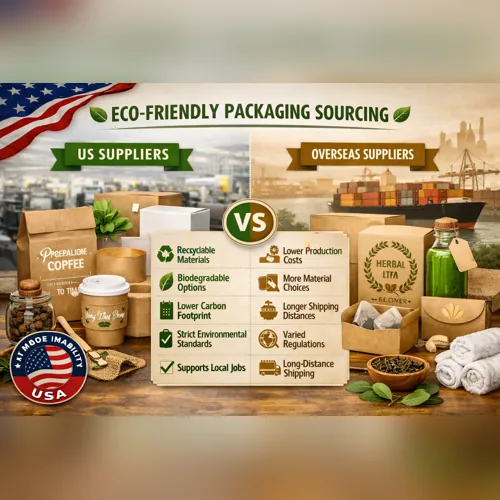
Making it here rather than importing keeps the rest of the chain honest too. The trip from press to your warehouse is days and a few hundred miles, not weeks across an ocean. That is truly lower-carbon. And easy to state on a sustainability page. Kraft slots into a broader recyclable and compostable packaging program.
Small runs, quick turnaround
Working with a US shop does not mean a giant first order. We start at 100 boxes. No die, plate, or tooling charges. So a fully custom kraft size costs nothing extra to set up.
A standard run is printed and shipped in about eight to ten business days after you approve the proof. Rush is on offer. Every order includes a free dieline and 3D mockup. Plus free shipping anywhere in the US. See how quantity and finishes move the price in our packaging cost guide.
Then start a free quote or contact the team. Kraft is a strong fit for handmade soap, candles, tea and coffee, supplements, and any product whose buyers care where things come from.
Frequently asked questions
Why does color look different printed on kraft?
Kraft board is brown, not white. So ink sits over a dark base. Bright colors come out softer and warmer. For vivid color or a true white, we add a white underprint first. So the CMYK on top reads accurately. Many brands prefer the natural muted look and skip it.
Is uncoated kraft recyclable and compostable?
Yes. In its uncoated form, kraft board is curbside recyclable in most US programs. It is also biodegradable. We print with soy-based inks and offer recycled and FSC-certified stocks. So the finished box backs up a sustainability claim.
Can I still get a premium look on kraft?
Yes. Kraft takes foil stamping, embossing, and debossing very well. Metallic foils really pop against the brown. So you can get a high-end finish while keeping the natural, eco look.
Is kraft food-safe for bakery or takeout?
Yes. We make food-grade kraft boxes with food-contact-safe inks for bakery, takeout, and grab-and-go use. Tell us the use case and we will spec the right stock.
What is the minimum kraft order?
One hundred boxes. No die, plate, or setup fees. So you can launch or test a kraft SKU. You do not have to commit to overseas-scale volume.
What is the difference between kraft and bleached white paperboard?
Kraft is unbleached paperboard that keeps the natural brown color of the wood pulp, giving an earthy, tactile look that reads eco at a glance. Bleached white paperboard (SBS) is chemically whitened for photographic color accuracy and a clean retail feel.
Kraft mutes bright ink unless you underprint white; SBS shows CMYK faithfully. Kraft usually recycles more easily uncoated; SBS is often coated for gloss.
How do I choose between kraft and SBS for my product?
Choose kraft when your brand story is natural, handmade, organic, or eco – soap, tea, coffee, small-batch beauty, and CBD all wear it well. Choose SBS when you need photographic color, a true white ground, or a shelf presence built on bold graphics. If you need both bright color and the kraft feel, we lay down a white underprint on kraft so the CMYK on top reads accurately.
What are the benefits of kraft boxes for eco-conscious brands?
Uncoated kraft is one of the easiest sustainability claims to back up: curbside recyclable in most US programs, biodegradable, and available in recycled-content or FSC-certified stock. Combined with our soy-based inks and Cheshire, Connecticut production (days of transit, not weeks across an ocean), the whole supply chain supports honest claims – without needing a special compost stream your buyer cannot reach.
Are custom kraft boxes worth it over stock brown shippers?
Yes for retail, unboxing, and branded shipping. A stock brown shipper is generic; a printed custom kraft box carries logo, dieline, and finish choices tailored to your product. Because we charge no die, plate, or setup fees and start at 100 boxes, the branded version costs no more in tooling than the plain one.
You get the same recyclable material with a shelf identity buyers will actually photograph.