Blog · By The Packaging Vista Team · June 23, 2026
Custom Eco-Friendly Boxes in the USA: Sourcing From a US Manufacturer
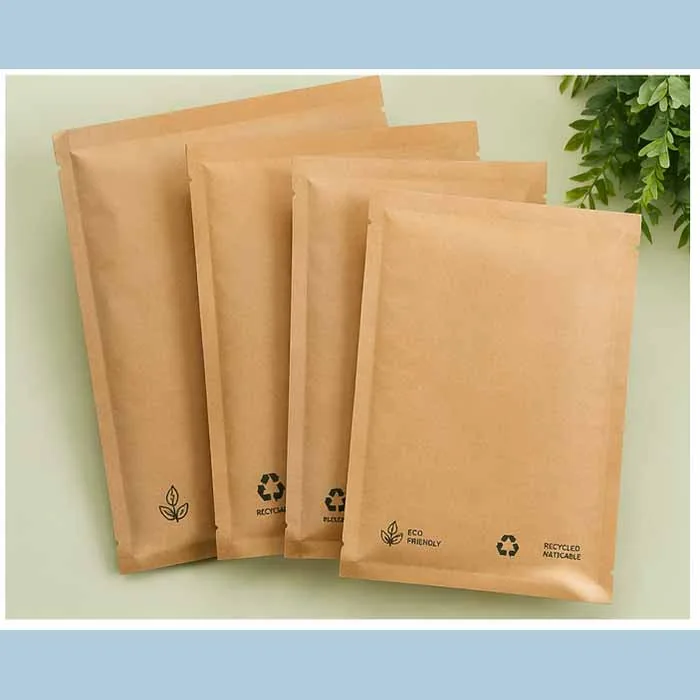
“Eco-friendly” is not one stock. It is a set of choices. Not all of them mean the same thing.
Recyclable, recycled-content, compostable, and FSC-certified are four claims. Each has a different end path. A box can be one but not the others.
Getting this right is key. A green claim buyers cannot act on hurts more than it helps.
Packaging Vista prints custom eco boxes in the US. We use recyclable, recycled, and compostable stocks. This guide sorts out the picks. It shows how to design retail packaging that really gets recovered in US bins while still carrying strong product branding. It covers how to order too.
For the trade-offs between picks, start with our sustainable packaging guide. Our recyclable vs compostable explainer clears up the top mix-up.
Recyclable, recycled, compostable: knowing which you need
These terms get used as swaps. But they mean different things:
- Recyclable – the box can be picked up after use. Uncoated paperboard fits most curbside bins.
- Recycled-content – the box is part-made from post-buyer fiber. This cuts virgin stock at the front end.
- Compostable – the box breaks down in a compost site. This fits molded fiber and some coatings. It does not fit all paperboard.
- Responsibly sourced – FSC-certified stock. The fiber comes from well-run forests.
A box can lead with recycled content at the input. It can lead with recyclable at the output. Those two goals stack well.
Compostable is a separate path. It fits set products and set bins. We match the stock to the goal your brand wants to claim.
| Claim | What it means | Best stock | End-of-life path |
|---|---|---|---|
| Recyclable | Accepted by curbside programs | Uncoated SBS or kraft | Curbside paper stream |
| Recycled-content | Made from post-consumer fiber | Recycled kraft board | Still recyclable at end |
| Compostable | Breaks down in a compost site | Molded fiber, uncoated kraft | Industrial or home compost |
| FSC-certified | Fiber from well-run forests | Any FSC-labeled paperboard | Curbside paper stream |
| Soy-ink printed | Lower-VOC inks | Any paperboard | Keeps board recyclable |
The eco material menu
We print on a full range of green stocks. We pick the one that fits your claim and your product:
- Recyclable kraft and SBS paperboard – curbside-fit retail and product boxes. See our natural kraft boxes.
- Recycled-content board – post-buyer fiber to cut virgin stock use.
- FSC-certified stock – well-sourced paper for brands that want third-party proof.
- Compostable picks and molded fiber – for inserts and shapes made to break down.
- Soy-based inks and water-based coatings – greener print chem that keeps the box recyclable.
Designing a box that gets recovered
An eco box only wins if it can be recycled or composted in real life. That is a design job, not just a stock choice.
Mixed-stock laminates, plastic windows, and heavy coatings can knock a good box out of the curbside stream. We design for US bins.
Our defaults are curbside-fit paperboard, low mixed-stock lamination, and recyclable window film only where a window is truly needed. We leave clean space on the panel for recycle notes or a How2Recycle-style label.
You own and confirm any green claim you print. That way it stays true to your stock and your region. We give the print-ready layout and stock advice, not legal advice.
Sustainable does not mean limited
Going eco does not box you into a plain brown look. It does not lock you into one shape.
We print the full range at home on green stocks. That includes corrugated mailers for ecommerce, tuck-end and sleeve cartons for retail, rigid and gift boxes, and food-grade kraft.
You can pick full CMYK and Pantone. You can add finishes like soft-touch lamination and foil on recyclable stocks.
Does your product need a strong shipper, not a retail carton? A recycled-liner corrugated box covers that. It has a high recycled-fiber share by default.
Why sourcing locally strengthens the claim
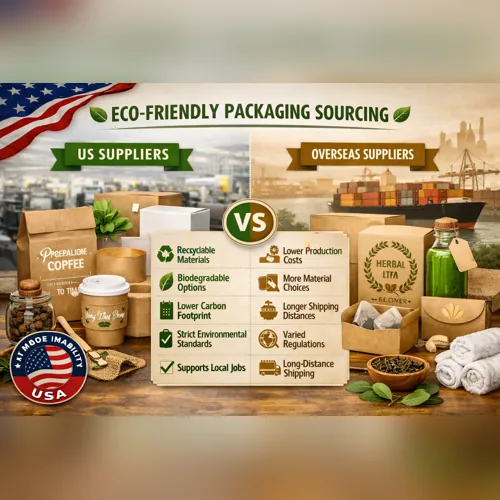
Green is a full supply-chain story. It is hard to square a recyclable box with six to ten weeks of ocean freight from far away.
Making boxes close to your buyers shrinks that chain. It cuts the freight emissions behind every box. A made-in-USA, lower-footprint claim gets easy to back up.
The plain bonus is speed. Domestic eco SKUs restock in days, not months. There is no customs broker or duty to eat.
Low minimums on eco stock
Green boxes do not have to start with a container-load. We run as few as 100 boxes per order. No die, plate, or tooling fees.
Recyclable and recycled stocks run at that same low minimum. You do not pay an eco tax to start small.
A standard job prints and ships in about eight to ten business days after proof sign-off. Every order gets a free dieline and 3D mockup. Shipping is free across the US.
See how run size and finish shift the price in our packaging cost guide. Then start a free quote or contact the team with your green goal and product details.
Frequently Asked Questions
What is the difference between recyclable, recycled, and compostable boxes?
Recyclable means the box can be picked up after use. Recycled-content means it is part-made from post-buyer fiber. Compostable means it breaks down in a compost site. They are separate claims. A box can be recyclable and made from recycled content at the same time. We match the stock to the claim you want.
Will my eco box be recyclable in US curbside programs?
We design for US bins. We use curbside-fit paperboard, low mixed-stock lamination, and recyclable window film only where needed. We leave room for recycle tips. You confirm and own any green claim you print. That keeps it true.
Can I get foil or lamination and still call the box eco-friendly?
Some finishes work on recyclable stocks. But heavy laminates and mixed stocks can block recyclability. We will flag which finishes keep the box in the loop. You can then balance look with your green goal.
Do recycled or compostable stocks cost more to order in small runs?
Recyclable and recycled stocks run at the same 100-box minimum. Setup fees are zero. You can launch a green line with no eco tax and no overseas run sizes. Specialty compostable stocks can vary. We will quote those clearly.
Where do your eco boxes come from?
Yes. We print and finish them here. That shortens the chain. It cuts freight emissions. A lower-carbon, made-in-USA claim is easy to back up. Restocks stay fast too.
Why is eco-friendly packaging important for US brands right now?
US shoppers, retailers, and state regulators are all pushing the same way. California, Colorado, Maine, Oregon, and Washington already have extended producer responsibility (EPR) laws that shift end-of-life cost onto brands. Big retailers publish sustainability scorecards.
And shoppers reward recyclable, low-plastic packs on shelf and social. Getting ahead of that with recyclable stocks and a shorter domestic supply chain protects both margin and brand equity.
How does an eco box get recovered in a US curbside bin?
Uncoated paperboard and kraft go into the paper stream at most curbside programs, get baled at a materials recovery facility, and turn into new packaging or tissue. What blocks recovery is mixed-stock laminates, heavy plastic windows, and coatings that cannot be pulped.
We default to curbside-fit paperboard, low mixed-stock lamination, and recyclable window film only where a window is truly needed – keeping the box in the loop.
How do I choose the right eco stock for my product?
Start with the claim you want to lead with. Recyclable kraft or SBS for retail cartons that go in curbside bins. Recycled-content board when the story is cutting virgin fiber at the input. FSC-certified stock when a buyer or retailer asks for third-party proof.
Molded fiber and compostable stocks for inserts and shapes going to industrial compost. We match the stock to the goal, then flag which finishes keep the claim honest.
What are the benefits of a shorter domestic supply chain for eco claims?
Ocean freight from Asia adds 6 to 10 weeks and a lot of CO2 per box. A recyclable carton that spent two months on a container ship is a weaker green story than the same carton made in Connecticut and trucked to your warehouse. A US-based supplier also lets you order in smaller runs, so less unsold stock ends up written off – the greenest packaging is packaging you actually use.
How much do eco-friendly boxes cost compared to standard cardboard?
Recyclable kraft and SBS run at the same 100-box minimum and roughly the same unit price as standard paperboard – there is no eco tax to start. Recycled-content board is close to parity. FSC-certified stock adds a small premium. Specialty compostable stocks and molded fiber inserts sit higher and we quote those clearly on a case-by-case basis.
Which eco stock is best for retail cartons?
For most retail categories, recyclable SBS if you need bright, photographic color, or natural kraft if the brand cue is artisan or eco. Both are curbside-fit in the US, both take print and finishes cleanly, and both stay light enough to keep shipping cost down. Add a recycled-content or FSC claim on the panel when it fits the stock actually specified.
Is switching to eco-friendly packaging worth it for a small brand?
For most brands, yes. The unit-cost gap on recyclable kraft or SBS is small or zero, the branding lift on green-minded shoppers is real, and getting ahead of EPR laws avoids a scramble later. The switch is not worth it only when your product needs a barrier or format no eco stock currently supports – and even then, right-sizing and cutting overpack usually earn a partial win.