Blog · By The Packaging Vista Team · June 23, 2026
Custom Cardboard Boxes in the USA: Sourcing From a US Manufacturer
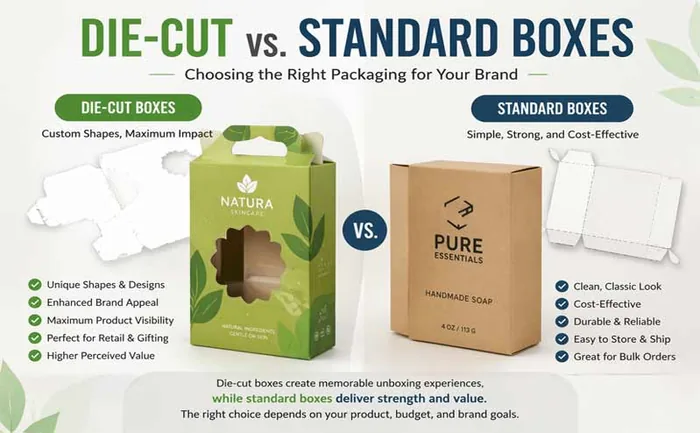
A custom cardboard box in this guide means a printed folding carton made from lightweight paperboard – the smooth single-ply stock that retail cartons and product boxes are folded from. This is the box that sits on a shelf, not the heavy fluted shipper.
“Cardboard” gets used loosely for everything from a cereal carton to a moving box. In a print shop it usually means one thing: the paperboard folding carton described above. That is what this guide covers.
We fold and print these cardboard boxes in Connecticut and send them across the country as retail packaging for shelves and counters. Below we cover the board grades, the carton styles, and how an everyday cardboard box gets ordered without the overseas wait – and how the print carries your product branding at the point where a shopper first sees it.
If you are weighing a thin carton against a sturdy shipper, our paperboard vs corrugated comparison sorts out which one your product needs.
| Attribute | Detail |
|---|---|
| Board grades | SBS 14–24 pt, kraft, chipboard for retail cartons |
| Common structures | Reverse-tuck, straight-tuck, sleeve, two-piece |
| Full CMYK + Pantone; up to 6 colors on premium runs | |
| Finishes | Matte or gloss lam, soft-touch, spot UV, foil |
| Recyclability | Curbside recyclable (SBS and kraft) |
| MOQ / lead time | 100 boxes / 8–10 business days |
Caliper and board grades that suit a retail carton
Paperboard is specified by thickness, measured in points. One point equals one-thousandth of an inch. Most retail cardboard boxes land between about 14pt and 24pt. Use lighter calipers for small, low-weight items like cosmetics or supplements. Use heavier calipers for larger cartons that need to hold their shape on a shelf.
The two stocks we run most are bright white SBS and natural kraft. SBS is a bleached board that gives clean, photographic color. Kraft is an unbleached brown board with a rustic look. Both fold crisply, take print well, and stay light. That keeps a retail carton cheap to ship to your buyers once it is filled.
Cardboard is not the same as a corrugated shipper
This is the difference that trips brands up. So it is worth stating plainly. A cardboard folding carton is a single layer of paperboard. It is thin, foldable, and made for presentation and light retail use.
Corrugated shipping boxes are built from a fluted middle layer glued between two liners. That is what gives them stacking and crush strength for transit. A folding carton holds a bar of soap or a bottle on a shelf. A corrugated case carries a dozen of those cartons through the carrier network.
Many of our buyers use both: the printed cardboard box as the retail face of the product, and a plain corrugated master case to ship it. If you mail single products direct to buyers, a corrugated mailer box is the format you want instead.
Folding carton styles we make
Almost every retail cardboard box is one of a few proven structures. We cut all of them to your exact size:
- Straight tuck and reverse tuck cartons – the standard product box, fast to set up by hand and economical to run.
- Auto-bottom (crash-lock) cartons – the bottom snaps into place, which speeds up packing for heavier or fragile items.
- Sleeves and pillow boxes – lightweight formats that show off product or save material.
- Display and counter cartons – cartons designed to open out or stand on a shelf.
We never charge a die or setup fee. So a fully custom shape or an odd size costs the same in tooling as a stock one. That is nothing. Browse the full range of folding carton formats if you are not sure which structure fits.
Plain or printed, your call
Not every cardboard box needs four-color art. If you just need a clean, recyclable box for storage, kitting, or no-frills shipping of a retail item, we run low-cost unprinted kraft cartons at the same low minimum.
When the box is the brand, sitting on a shelf next to rivals, we print full CMYK plus Pantone spot colors. We add finishes that make it read as premium: soft-touch or gloss lamination, foil stamping, embossing, and spot UV. On natural kraft, a white underprint keeps bright colors from going muddy against the brown stock.
A recyclable box with a short supply line
Paperboard is one of the most widely recovered materials in US curbside programs. So a cardboard carton is an easy sustainability point to put on the box. We offer recycled-content board and soy-based inks for brands that want to state the claim.
You can extend that into fully recyclable and compostable packaging across the rest of your line. Making the cartons at home rather than importing them also cuts the freight emissions and the lead time. That matters for an everyday item you reorder often.
Low minimums, quick restocks
You do not need a shipping container of cartons to get started. We run as few as 100 boxes per order. No die, plate, or tooling charges. A typical job is printed and on its way about a week and a half after you sign off on the proof. Rush slots are on offer when a deadline is tight.
Every order includes a free dieline and a 3D mockup. So you approve the fit before we print. Shipping is on us to any US address. For a sense of how quantity and finish move the unit price, see our guide to packaging costs. Then start a free quote or reach the team with your sizes.
Frequently Asked Questions
What thickness of cardboard should I use for a retail box?
Most retail folding cartons use paperboard between about 14pt and 24pt. Lighter calipers suit small, low-weight items. Heavier calipers hold their shape on larger cartons. Tell us the product and we will suggest a grade. We show it on a free 3D mockup.
Is a cardboard box strong enough to ship on its own?
A thin paperboard carton is built for retail presentation and light handling. It is not built to survive the carrier network alone. To mail products direct to buyers, choose a corrugated mailer. Or pack your printed cartons inside a corrugated master case.
Can I order cardboard boxes without printing on them?
Yes. We make plain kraft cartons for storage, kitting, and low-cost shipping at the same 100-box minimum. No setup charge added to the box price.
Do you make custom sizes, or only standard ones?
Any size. We cut the dieline to your exact sizes. There are no die or tooling fees. So a custom size costs the same to set up as a stock one.
How small an order will you take?
One hundred boxes is the floor. That lets you test a new product or refresh a design. You do not have to buy overseas-scale volume.
What is the difference between cardboard and corrugated?
Cardboard here means a single-layer paperboard folding carton – the thin, foldable stock used for retail cartons between roughly 14pt and 24pt. Corrugated is a fluted middle layer glued between two liners, purpose-built for shipping crush and stacking loads. A cardboard carton faces the buyer on the shelf; a corrugated case carries a dozen of those cartons through the carrier network.
How much do custom cardboard boxes cost in the USA?
Pricing is quote-based and moves with size, caliper, print coverage, and finish. Because we charge no die, plate, or setup fees and start at 100 boxes, small runs stay accessible. Free US shipping is included, so the landed cost is the box cost. Our packaging cost guide walks through the levers, and a free quote returns your exact number in one business day.
Why is ordering cardboard packaging from a US-based supplier worth the switch from overseas?
Our 8–10 business day turnaround collapses lead time from months to about a week and a half after proof approval, and rush slots are on offer for tight launches. You also avoid container-scale MOQs and customs delays. For an everyday retail item you reorder often, short lead time and a 100-box floor let you keep inventory lean and iterate on artwork without dead stock.
Which style is best for a first-time cardboard box order?
A straight tuck or reverse tuck carton is the safest first choice for most products. It sets up quickly by hand, runs economically, and covers small cosmetics, supplements, and light retail items well. If your product is heavier or fragile, an auto-bottom (crash-lock) carton speeds packing and holds up better. We build the dieline free either way so you can compare before printing.