Blog · By The Packaging Vista Team · June 20, 2026
Bakery Packaging: Boxes for Cakes, Cupcakes and Pastries
Bakery packaging has three jobs at once. It has to protect a fragile product. It has to resist grease. And it has to show the product off.
Baked goods are fragile and often photographed. So the box matters more here than for most food & beverage boxes. The right box keeps a cake stable. It stops a buttery pastry from staining the carton. And it frames the product so buyers order with their eyes.
This guide goes deeper on bakery than our main food packaging guide. It walks through box styles for cakes, cupcakes, and pastries. And it covers the materials, packaging design, and food-safety basics – where product protection literally decides whether a wedding cake arrives whole – that keep your bakery legal.
What boxes fit cakes?
Cakes need tall, sturdy boxes that protect tiers and frosting and do not crush in transit. Heavier board and a snug fit keep the cake stable. A window lets buyers see it without opening the box.
Box height matters as much as the footprint. A deep box keeps the lid from touching the frosting on tall or tiered cakes. For exact sizes by cake diameter, see our cake box sizes guide. Browse structures on our tall windowed custom cake boxes page.
What boxes fit cupcakes and muffins?
Cupcakes move and topple in an empty box. So a fitted insert that holds each cup in place is a must. That is true for singles, four-packs, or a full dozen. The insert keeps the swirl of frosting intact. And it stops cups from colliding on the drive home.
Windowed lids show off decorated tops and lift impulse sales at the counter. See fitted-insert cupcake and muffin boxes and our inserts guide for how fitted trays are built.
What fits pastries, cookies, and donuts?
Pastries, cookies, and donuts need grease resistance so the box stays clean. They sell well in windowed cartons that show the product. Kraft reads natural and artisan for these items, which suits handmade and small-batch brands.
A simple tuck-end or auto-bottom carton assembles fast during a busy morning rush. A gable box with a handle works for grab-and-go assortments. See grease-resistant kraft bakery boxes, windowed bakery display boxes, and gable boxes with carry handles for handled options.
How do you pick the right box style?
Matching the structure to the product saves money and reduces damage. Use this quick reference to narrow your options.
| Product | Recommended box | Why |
|---|---|---|
| Layer & tiered cakes | Tall windowed cake box | Protects frosting, shows the cake |
| Cupcakes & muffins | Insert-fitted carton | Holds each cup steady |
| Cookies & pastries | Kraft or windowed carton | Grease resistance, artisan look |
| Mixed grab-and-go | Gable box with handle | Easy carry, fast assembly |
Which materials are food-safe?
Bakery boxes should use food-grade stocks. For greasy items, add a grease-resistant coating, ideally PFAS-free. The barrier keeps oils from soaking through, weakening the carton, or staining the print.
Food-contact-safe inks and coatings are a must for anything touching the product. Our food-safe packaging guide covers materials and barriers in detail. Our greaseproof vs. wax vs. parchment guide explains the liner papers that pair with bakery cartons.
How do you design for the photo?
Bakery is a visual, social business. A clean window, a branded interior, and tidy print earn shares and repeat orders. A little design care here pays off more than in most food categories.
Keep the window crisp so the product is the hero. Print your logo and handle on the lid where it photographs well. And add a printed interior that surprises the buyer on open. For finish options that suit a premium bakery line, like matte lamination, foil, or soft-touch, see our box finishes guide.
How do you sell baked goods at retail?
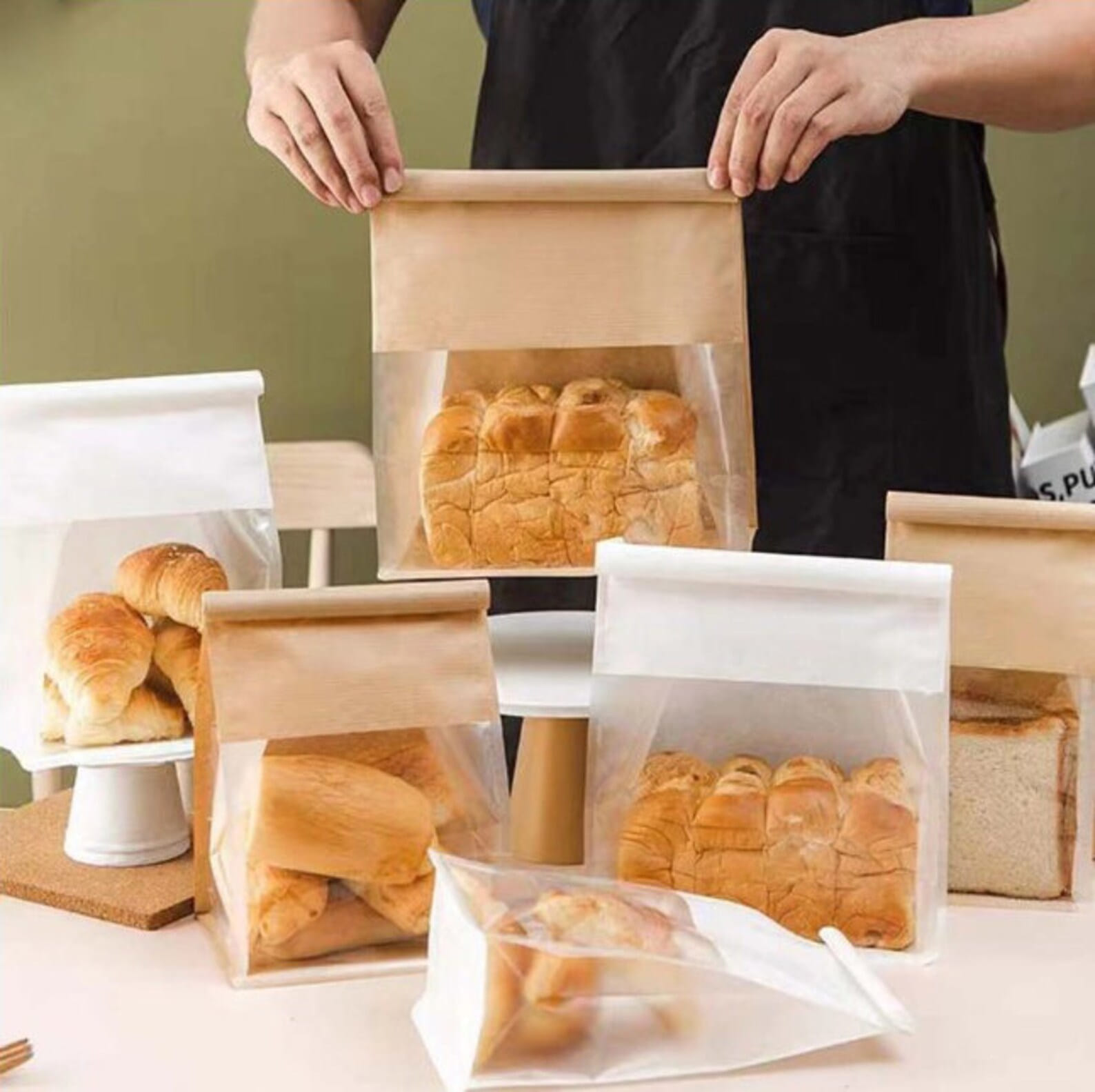
Bakeries that sell packaged goods on a shelf, like cookies, granola, or loaf cakes, need resealable, branded packaging that holds freshness. Tin-tie bags and printed cartons keep product fresh. They also carry your brand and any needed label copy.
See our guide to custom tin-tie bags for bakeries for that side of the business. And see our food packaging by product guide for matching other items to boxes.
What inserts and liners do you need?
Inside the box, a few simple parts make a big difference. Fitted inserts hold cupcakes, macarons, and single pastries so they do not slide and collide. Dividers and partitions split assorted items so flavors and toppings stay intact. See our box dividers and partitions guide.
For greasy or moist items, a liner paper between the product and the carton keeps the box clean and the product fresh. Our food wrapping papers guide covers the options, from deli sheets to greaseproof liners. These small add-ons protect the product and lift the feel of even a simple kraft box.
How should bakeries brand the box?
A branded box turns every order into a marketing piece. Print your logo, contact details, and social handle on the lid. So buyers and gift recipients remember where the treat came from.
For packaged retail items, the box or bag also has to carry the basics buyers and regulators expect. That means product name, net weight, ingredients, and allergen info. So leave room on the panel for that copy. A tidy label with clear allergen callouts builds trust for anyone buying for a party or for someone with dietary needs. It also keeps your packaged goods shelf-ready.
Panels most bakeries include on a branded box or bag:
- Bakery name and logo – front and lid for the photo moment.
- Product name and weight – needed for packaged retail items.
- Ingredient list – on the side or back panel.
- Allergen callouts – a bold line for common triggers (nuts, dairy, gluten).
- Best-by or made-on date – freshness signal for retail shelves.
- Contact and social handle – drives repeat orders and tags.
- Care or storage tip – keeps fragile items intact after the buyer leaves.
Offset or digital printing depends on your run size. Both print your brand cleanly on bakery stock.
How do you keep bakery boxes cheap?
Small bakeries often worry that branded boxes mean huge minimums. We keep that in reach. Custom bakery boxes start at a 100-box minimum. There are no die or plate fees. You get a free dieline and free design help. So a single-location bakery can order branded cake, cupcake, and pastry boxes without a warehouse of stock.
Standard turnaround runs 8–10 days after art approval. If you are weighing branded boxes against plain stock, our low MOQ packaging guide explains how small runs work.
Frequently asked questions
What box keeps a cake from getting crushed?
A tall box made from heavier board, sized so the footprint fits snug and the height clears the frosting. A sturdy base keeps the cake from sliding. A deep lid stops it from touching the top.
Are your bakery boxes grease-resistant and food-safe?
Yes. We use food-grade stocks. We can add a grease-resistant, PFAS-free coating for buttery and oily items. And we print with food-contact-safe inks.
Can I get bakery boxes with a window?
Yes. Window cartons are popular for cakes, cupcakes, and pastries. They show the product and lift impulse sales. We can place a clear panel anywhere on the box.
What is the minimum order for custom bakery boxes?
We make custom bakery boxes from a low 100-unit minimum. No die or plate fees. Free dieline. So small bakeries can order branded boxes without breaking the bank.
How do I choose the right bakery box for my product?
Match the box to the item’s fragility and how you sell it. Tall windowed cake boxes protect frosting on layer cakes. Insert-fitted cartons hold cupcakes upright so they cannot topple. Kraft or windowed cartons suit cookies and pastries where an artisan look matters.
Gable boxes with handles serve mixed grab-and-go orders. For packaged retail (loaf cakes, granola, cookies for shelf), tin-tie bags are the freshness standard.
What are the benefits of custom bakery boxes over stock bakery packaging?
Fit, branding, and food-safety consistency. Stock bakery boxes force you to fit product to box, which wastes space and lets cakes slide. Custom cartons are cut to your exact cake diameter or cupcake count, print your logo where it photographs, and use PFAS-free grease-resistant coatings you can verify.
Every bag or box leaving your counter becomes marketing on the street, and buyers register the branded touch as care.
What is the difference between a bakery box and a food takeout box?
Bakery boxes emphasize presentation and short-hold freshness – often windowed, tall to protect frosting, and printed on food-grade paperboard. Takeout boxes emphasize heat, grease, and moisture handling for cooked meals – usually clay-coated or with grease-resistant coatings, gable or clamshell format, and designed for short transit to a table.
A bakery cake box will not survive a hot pasta; a takeout clamshell wrecks a decorated cake.
How much do custom bakery boxes cost at 100 units?
Pricing is quote-based on size, stock, window (if any), and print coverage. A simple kraft cookie carton runs lower than an SBS windowed tiered-cake box with a full-color print. Grease-resistant PFAS-free coatings add a small per-unit cost. Since we do not charge die, plate, or setup fees, running different sizes for cakes, cupcakes, and cookies on separate dielines does not multiply your tooling cost.
Are custom-printed bakery boxes worth it for a single-location bakery?
Yes when weekend production, wedding cakes, or Instagram-driven sales are a real share of revenue. A branded cake box travels home in a car, gets photographed on a countertop, and shows up on social feeds – free reach a plain white box never earns.
At our 100-box minimum with no plate fees, entry cost is well within a single-shop budget. Skip only if you sell purely at a counter and boxes rarely leave the neighborhood.
Get custom bakery boxes
Tell us what you bake and your sizes. We will suggest boxes and inserts with a free dieline. No die or plate fees. From a 100-box minimum. With an 8–10 day turnaround. Start with our full food packaging guide. Then request your free quote or contact our team.